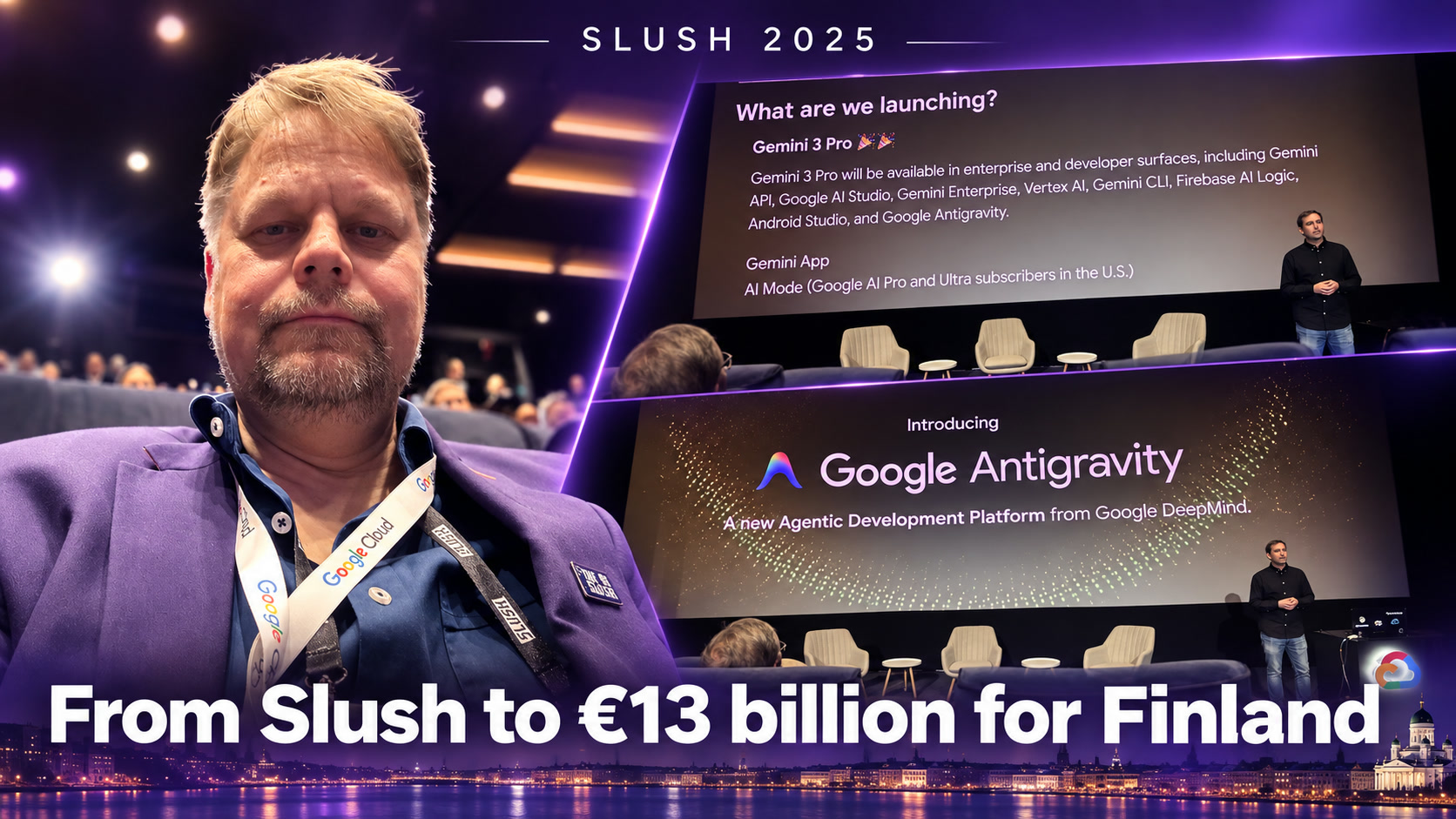
Economy · first published 2026-09-09 · translated from the Finnish original
Slush was the launchpad: Google’s €13 billion Finland plan and Fortum’s role
Sami Miettinen recalls an invitation to Google DeepMind’s Slush event on 18 November 2025 and connects Gemini 3 and Antigravity with his interviews with Google’s Topi Manu and Fortum’s Heikki Keskiväli.
When Google brought the Gemini 3 and Antigravity launch to Slush week in Helsinki, it felt like a sign that something extraordinary was beginning. Finland was in the room for the next chapter of AI. In 2026, that memory has acquired a new scale: an investment plan of at least €13 billion, Google’s largest single investment in Europe.
On 18 November 2025, I was an invited guest at a Google DeepMind Slush side event in a theatre. Around the global launch of Gemini 3 and Google Antigravity, I had the chance to see where everyday AI was heading. I left with the feeling that more people would be able to turn their ideas into something real.
For me, that was the moment. Excitement about AI became a personal affection for Google.
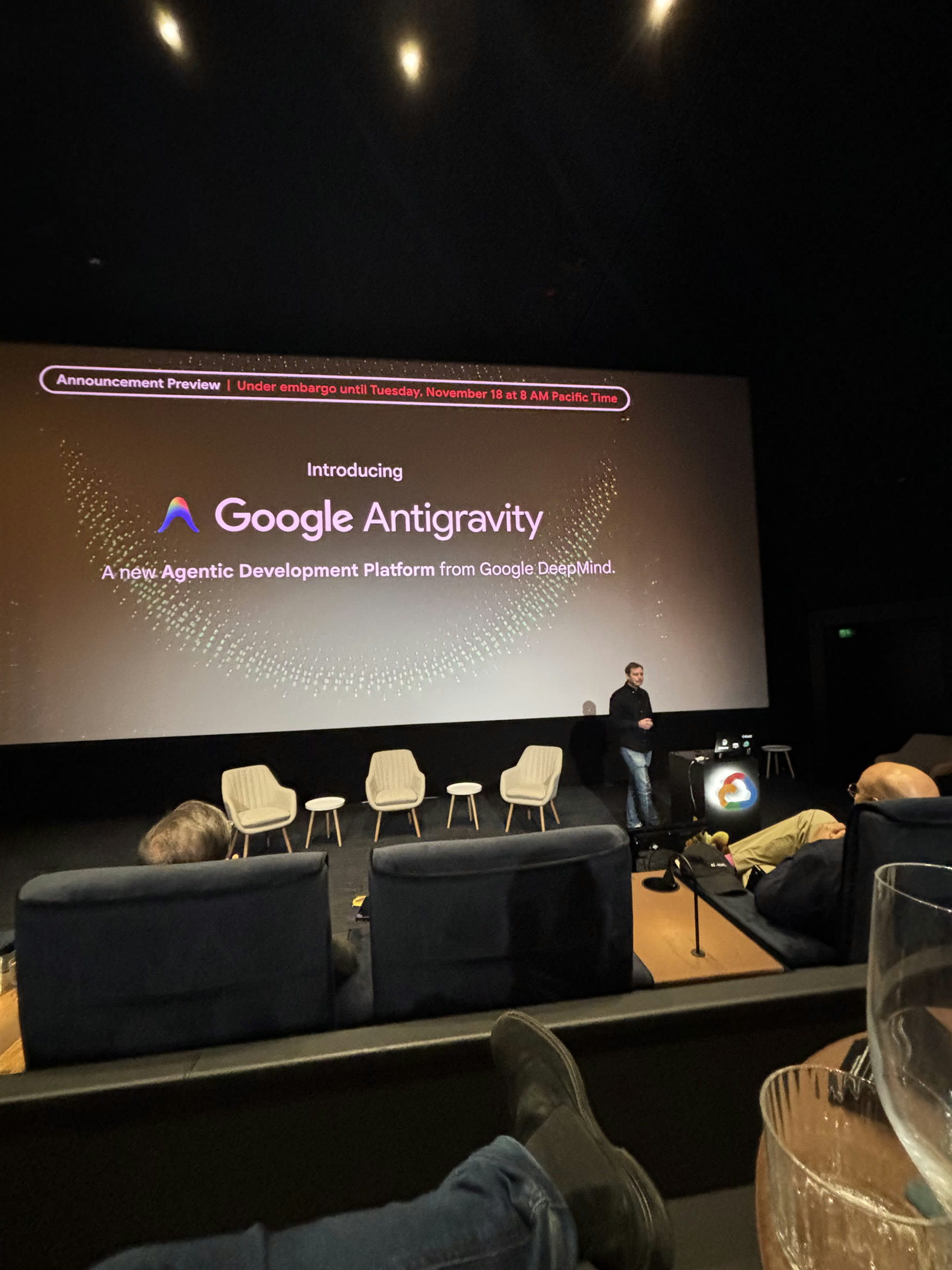
My photograph from the audience on 18 November 2025. Google Antigravity is being introduced on the screen. Photo: Sami Miettinen.
The November evening I remember
The date was 18 November 2025. Slush itself took place on 19 and 20 November. Google’s Gemini 3 announcement and Antigravity introduction are both dated 18 November 2025.
In my X post on 19 November 2025, I wrote about being impressed by the Google DeepMind launch and Patrick Löber’s demonstration. I also mentioned Agent Engine.
For me, that Slush brought together inspiring people and tools I could actually build with. In the same post, I mentioned two applications I had already developed using Lovable. I wanted to see what I could make next.
AI for the things we actually do
Google’s November 2025 developer announcements connected Gemini 3 with Antigravity and AI Studio. Antigravity introduced agents that could plan, execute and verify tasks across an editor, terminal and browser. The prospect of describing a goal and building a working application was enormously appealing to me.
The Gemini app announcements that day extended into learning and everyday organisation. Canvas, Deep Research and the experimental Gemini Agent illustrated different routes from a question to a useful result. The agent initially launched for Ultra subscribers in the United States.
My photograph of the launch slide shows the breadth of the ecosystem: Gemini 3 Pro, AI Studio, Gemini Enterprise, Vertex AI, Gemini CLI, Firebase AI Logic, Android Studio and Antigravity. These were not all new products; the new model was being brought into a wide range of tools. My takeaway was simple: AI could help me research, learn and build as parts of the same workflow.
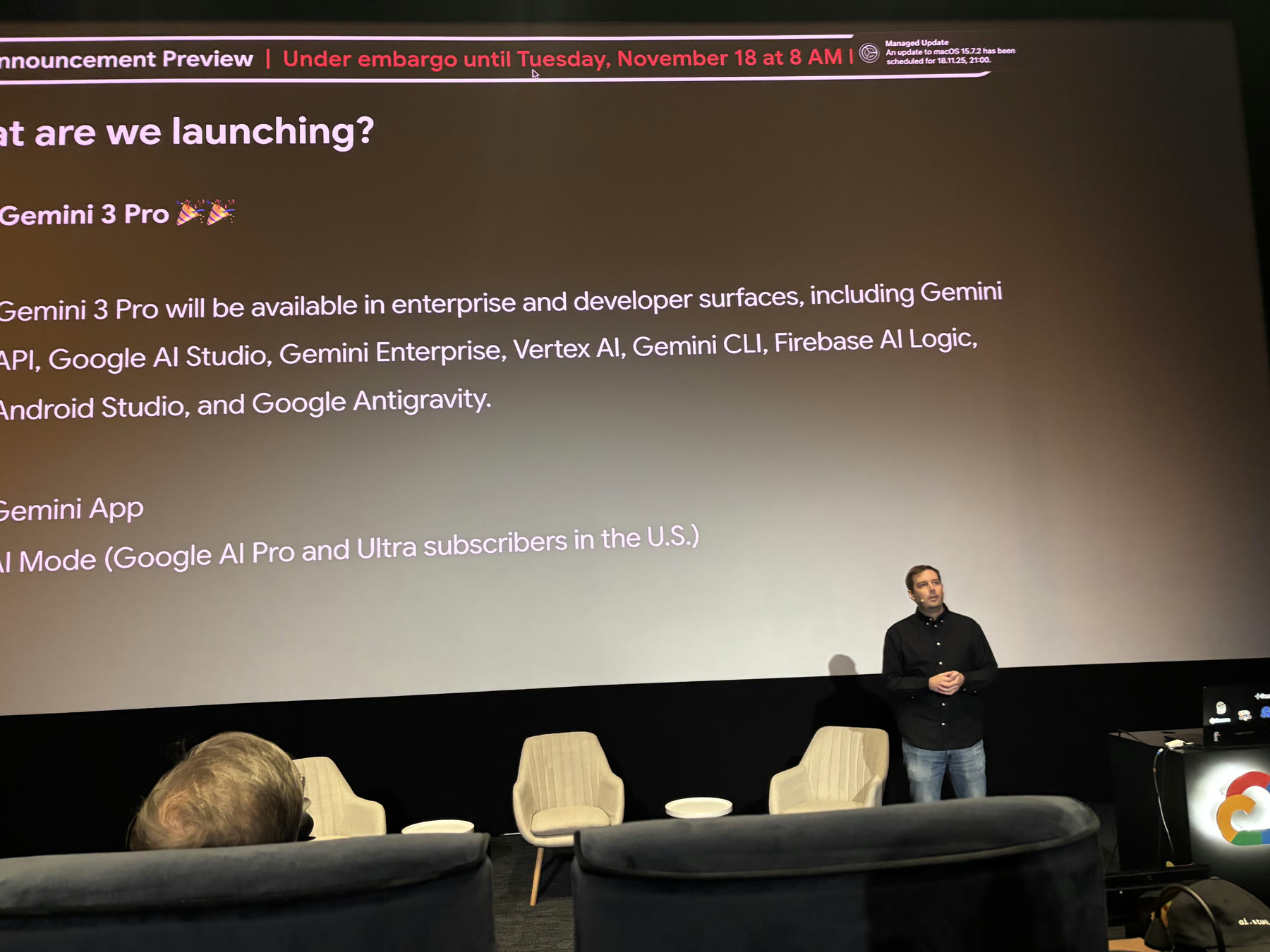
The Gemini 3 Pro launch slide on 18 November 2025. Photo: Sami Miettinen.
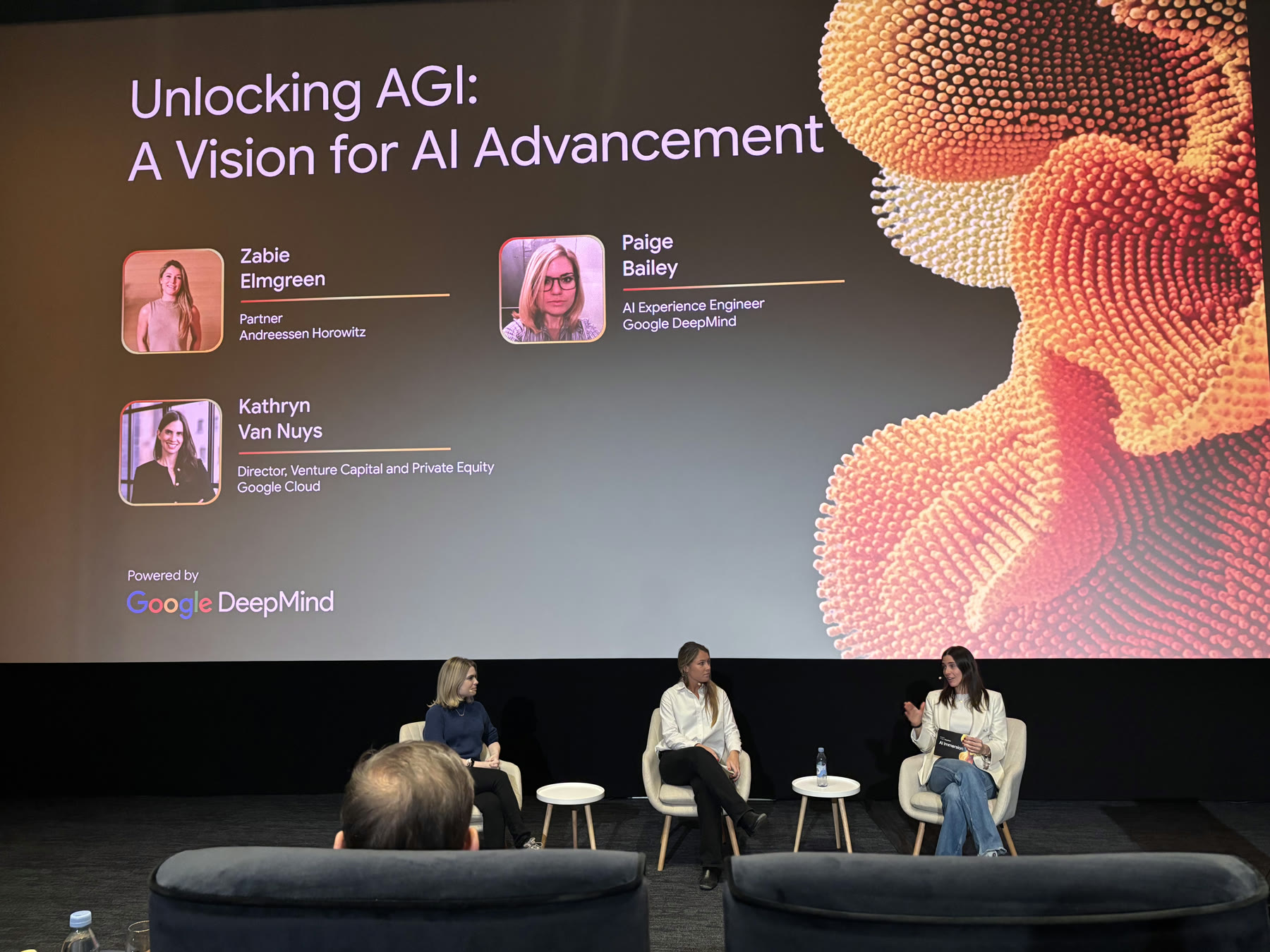
A discussion about AI’s future. The screen names Zabie Elmgreen, Paige Bailey and Kathryn Van Nuys. Photo: Sami Miettinen.
Topi Manu: AI that sees and hears
I returned to these ideas with Google’s Topi Manu in Neuvottelija episode 379, published on 8 April 2026. Our conversation covered Waymo, robotics, computer vision and multimodality: AI working with different forms of information together.
At 4:54, we return to my Slush visit. At 13:01, the discussion turns to AI Studio and practical tools, and at 22:39 to multimodality in business. The episode’s public description and chapters provide a useful guide to that journey.
The value of multimodality feels intuitive to me. My working day involves conversations, images, documents and numbers. The better AI can connect them, the more naturally it can support real work. It also gives us a chance to rethink how that work is done.
The promise is part of my everyday work
I regularly use Google’s multimodal features. Google 3.6 Pro Thinking is one of the tools in my everyday AI work. The enthusiasm has lasted well beyond one evening at Slush.
I also use the OKF format to structure data for my layered Karpathy Wiki memory system. I want conversations, sources and observations to accumulate into useful memory over time. Multimodal tools become more valuable when the information they help process can be organised and used again.
These are descriptions of my own workflow and the names I use for it. OKF and Karpathy Wiki are part of my memory setup, rather than Google products announced at the event.
Heikki Keskiväli: AI needs energy and investment
We explored another part of the picture on 28 November 2024 with Heikki Keskiväli, described in the episode as a strategy director at Fortum. Neuvottelija episode 286, Data-centre energy investments, examined the relationship between data centres and clean-energy investment. That episode was produced in commercial collaboration with Fortum Oyj.
Its description frames the challenge around matching energy demand, supply and prices: could data centres from companies such as Microsoft and Google help unlock investment?
That conversation feels particularly relevant now. Useful AI needs computing capacity, and computing needs a physical foundation. Finland’s opportunity extends from applications to energy and construction.
From Slush to Google’s biggest European investment
I now see that Slush evening as a launchpad. That is my interpretation of the journey, rather than a claim that an investment decision was made on stage. Google’s choice to bring the launch of its frontier model and major AI tools to an invited audience in Helsinki told me this was a place to pay attention to.
Google’s detailed announcement on 9 September 2026 specifies at least €13 billion during 2027–2028. Data centres, supporting infrastructure and partnerships span Hamina, Kajaani, Muhos and Vaala. “Biggest in Europe” means Google’s own largest single European investment.
Google’s energy blueprint connects computing growth with the electricity system. Nuclear power, renewable generation and flexibility complement each other. The announcement puts Google-supported new onshore wind capacity at a total of 629 MW. A contracted 94 MW battery system near Kajaani is expected to be operational in late 2027.
Fortum makes the long term investable
The centrepiece of Fortum’s stock-exchange release is a 22-year power purchase agreement with Google. It starts with a smaller capacity in 2028 and covers half of Loviisa nuclear plant capacity in 2030–2049. Predictable revenue supports lifetime extension through 2050 and power upgrades.
This is an electricity purchase agreement, not Google buying half the plant. The connection between long-term demand and investment certainty is precisely what makes my earlier conversation with Heikki Keskiväli so relevant now.
Loviisa has an approximately €1 billion lifetime-extension programme. The companies also signed a memorandum on new nuclear, renewables and flexibility. This opens cooperation; it is not yet a decision to build a new reactor. World Nuclear News also reports the agreement as an enabler of Loviisa’s continued operation.
To me, this is Finland’s opportunity: global AI demand can provide a long-term customer for domestic energy investment. Computing and electricity can be planned together. That makes this much more interesting than a construction announcement about a single server building.
As a Finn, I am delighted. We have an opportunity to help build AI’s foundations and develop useful services on top of them. I want to see Finnish businesses, researchers and builders seize that opportunity.
With Topi, we explored what AI can do. With Heikki, we explored what its physical foundations require. At Slush, I experienced the excitement of seeing those possibilities up close.
At Slush, I fell in love with the possibilities. Today, I’m celebrating the commitment to Finland.
Thank you, Google. Let’s build something wonderful.
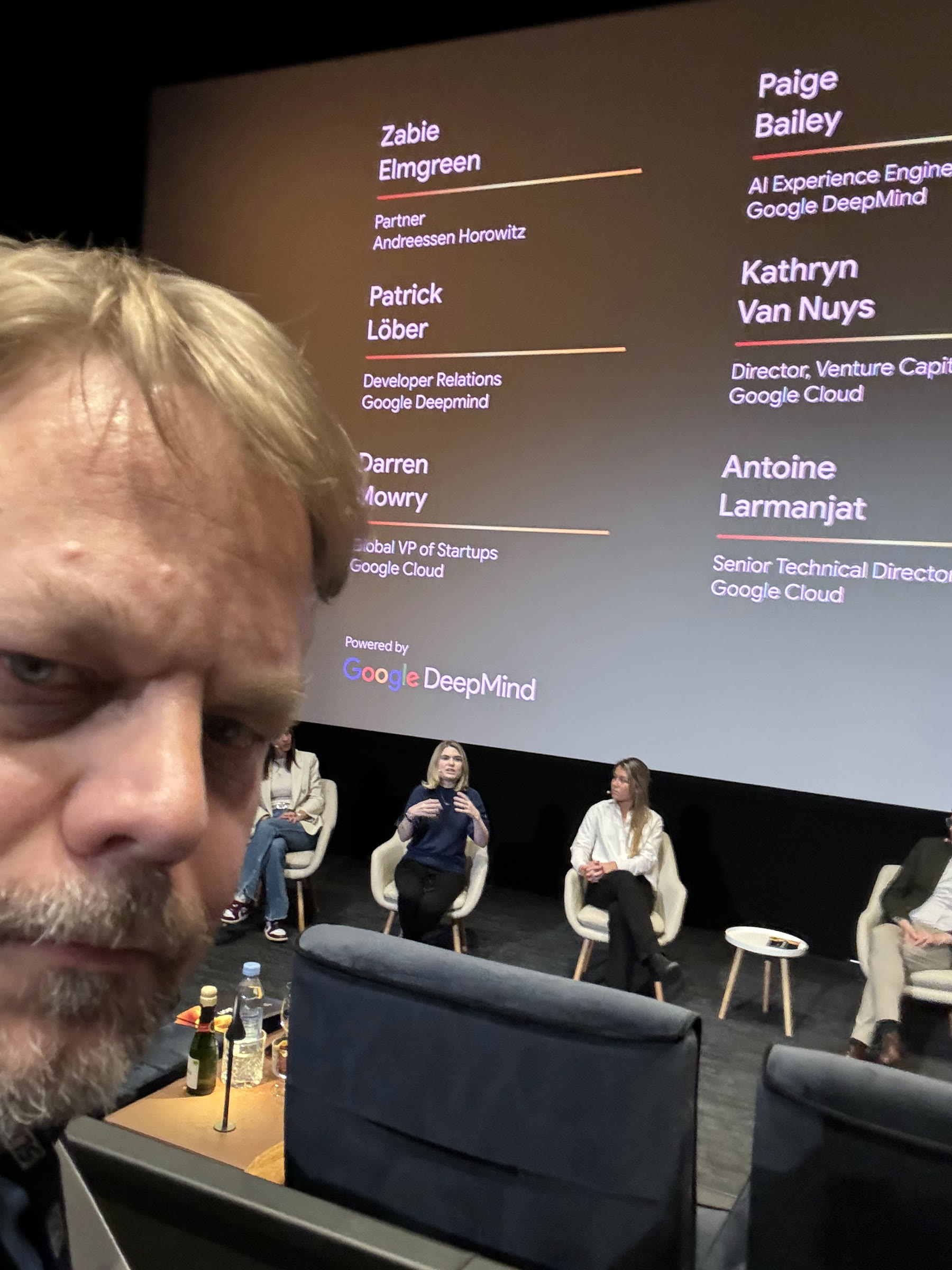
The evening’s panel and me in one frame. Photo: Sami Miettinen.
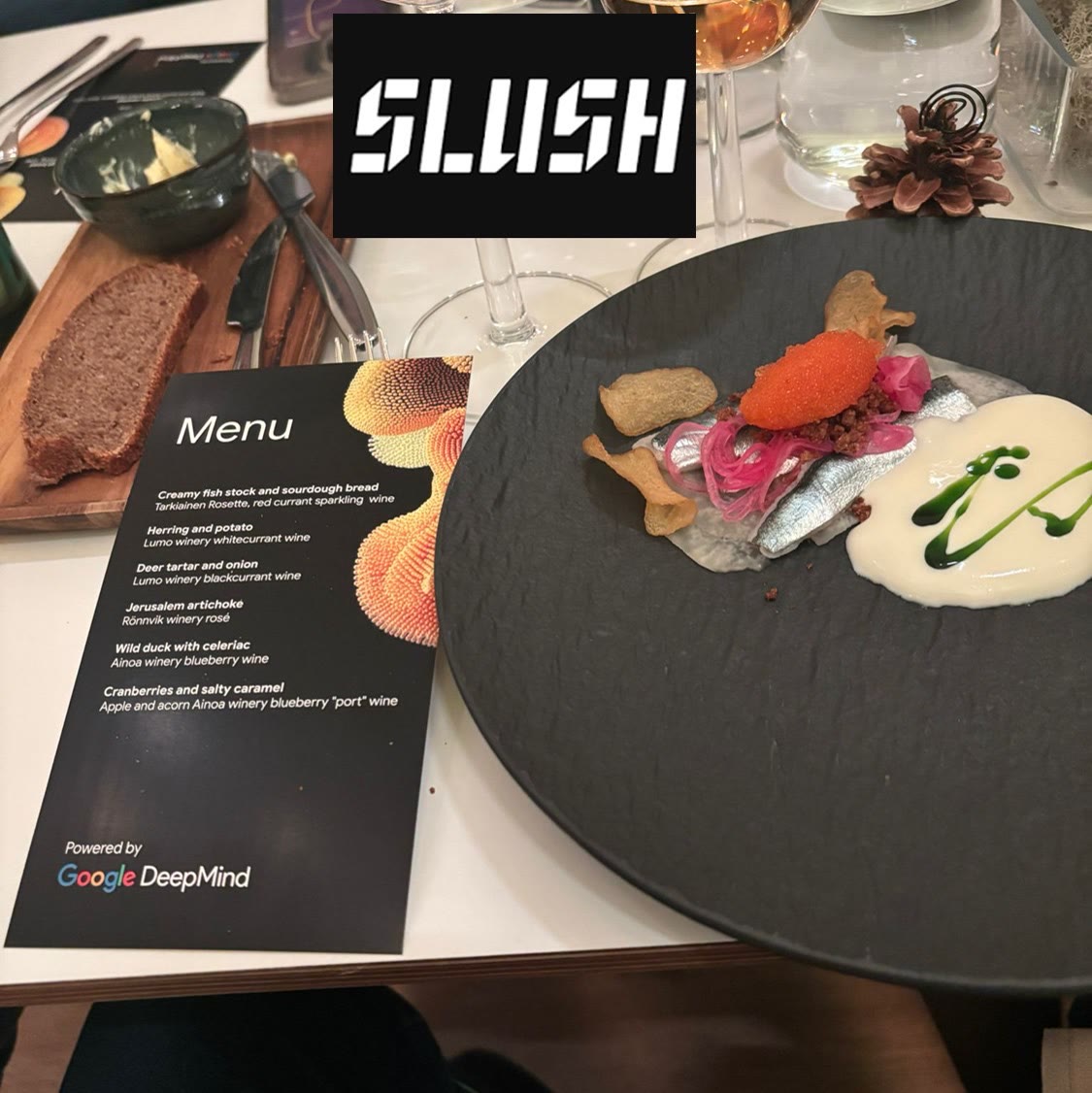
The hospitality was memorable, too. The menu carries the Google DeepMind name. Photograph and Slush composition supplied by Sami Miettinen.
Prepared with AI assistance from Sami Miettinen’s account, event photographs, X post, the linked product announcements, and the interviews’ public descriptions and chapter information. The hero is an AI-created collage of Sami’s event photographs. Other event images are original photographs.
Tools and workflow: Samantha, an OpenClaw agent using GPT-6 Astra as its reasoning model, helped gather dates, photographs and facts for this publication. Source checking, editing, hero-image composition and publishing of this edition were performed with Codex.